By Leo Valiquette
Oh nuts
A few weeks ago in a blog titled, The interview is never over, Francis talked about how one should never assume an interview with a journalist (or a blogger) is over until said journalist is out of earshot.
In the age of citizen journalism and the blogosphere, those ready with a notepad or tape recorder aren’t as easy to identify as they once were, so it behooves anyone concerned about how their comments and opinions can impact not only their image but that of their organization to avoid provocative, off-the-cuff remarks. Bottom line, if you don’t want to see it in print, don’t say it. And that doesn’t apply only to your discussions in public, it also applies to comments made in a public place where there could be a recording device lurking nearby.
Case in point, last night The New York Post featured the headline Jesse Jackson says he wants to cut Obama’s ‘nuts out’. Unfortunately the good reverend, who once aspired to be the first black U.S. president, made the comments off camera in a TV studio and failed to realize a microphone nearby was recording.
Tapping into the brain trust
 In recent meetings with a new client, we discussed the wealth of knowledge stored in the grey matter of the company’s chief tech guy. We talked about the value of being able to tap into this resource to position the client with the media as a thought leader in its space. This is an excellent way to maintain media exposure and interest for a client when there are no major corporate announcements in the pipeline. Editors and journalists are always looking for subject matter experts to comment on trends and issues.
The challenge, of course, is getting this busy executive engaged in the process of expelling his knowledge, perspective and cutting insight onto paper or a corporate blog.
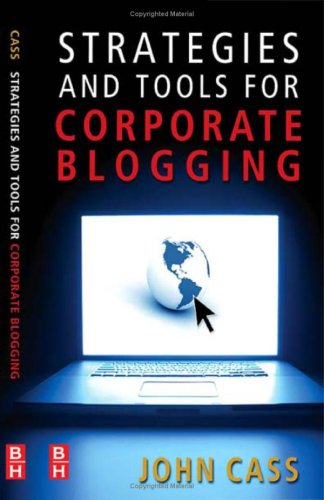
It’s a common problem. At the PR Communications blog, author John Cass offers some tips on how to kickstart the process from his book, Strategies and Tools for Corporate Blogging.
You’re boring, other people aren’t
Lastly, there’s the issue of networking. Some people are natural social butterflies for whom it comes naturally. For introverts like me, it’s a skill that requires practice and focused effort. Regardless of whether or not it comes easy, it’s a necessary business development tool that must be mastered, regardless of whether you’re a hack, a flack, or an executive of a start-up seeking potential partners, customers, investors and employees.
Piaras Kelly on his blog offers some insights of his own on how people can overcome their inherent aversion to networking at gatherings and make the most of the business development opportunity before them. One obvious tip: talking about yourself is boring, talking about others is interesting.




/// COMMENTS
6 Comments »John Cass
July 13, 2008 12:56 pmThanks so much for the reference to my article on jump starting busy executives.
Regarding networking, you can talk about yourself, the location or the person you are meeting. I think you have to do a little of all three, one to show you can listen, and two to demonstrate that you have a personality. Shouldn’t the emphasis be on a dialogue, finding topics where you have common interests and passions?
I was also wondering about how best to network with people in this age of social media connections. Having a large volume of followers does not mean you have the ability to chat with everyone, how do you talk with more than a 100 people at a time?
Leo
July 14, 2008 10:29 amJohn:
Thank you for your comments. I wholeheartedly agree that the emphasis should be on dialogue, which demonstrates the importance of walking into the room with a few good conversation triggers on the tip of your tongue. Whether you’re having a one-on-one meeting or working your way through a room, the focus should be on making a memorable and positive impression. An engaging conversation is the best way to do that. And as you detail in your comment, this isn’t rocket science.
The important thing is to avoid a one-sided exchange. We’ve all been in those situations where the other person says little and you find yourself blabbering on to fill the void. It’s important to ask questions that solicit opinions on the subject under discussion rather than just yes or no answers.
Conversely, there’s the people who natter on so much you can’t get a word in edgewise. That’s when the escape plan is needed. Perhaps it’s a polite “excuse me” to refresh a drink, or, even better, the recognition of a familiar face and direct eye contact that engages a third person and allows you to make a break — “Oh, there’s Such and Such. Been trying to get in touch with them.”
As for the perils of communicating with the masses in the age of social media, the only hope for all of us to keep our sanity without becoming slaves to it all is to be rather draconian about how large of a group we maintain. Who are the most valuable contacts? Who are the hangers-on that offer little value? Again, it’s like being in that crowded room and identifying who you consider to be the most important people to engage with before the event ends.
John Cass
July 14, 2008 9:56 pmI think you provide some great advice as it relates to networking. I was thinking about the example of Robert Scoble and his work in connecting with people based upon the new ideas they introduce to him, rather than the person’s level of influence. What do you think of that perspective, and also how it relates to Chris Anderson’s long tail idea?
Leo
July 15, 2008 10:44 amIdeas usually trump influence. Ideas are what stimulate discussion, discourse and even heated debate (which can often have constructive outcomes).
As a business journalist, I was much more interested in what fresh ideas, perpsectives and points of exploration a person could provide to me than I was by their level of influence. This is where I would find the catalysts for fresh and original content for the newspaper that grabbed readers’ attention. Influence can be used to reach into places that are otherwise innaccessible, but it’s only a tool to explore and present new ideas.
As for applying Anderson’s long tail theory to networking, again, its a balance between effort and potential reward. You speak of the challenge of maintaining dialogue with large communities of contacts. There is obviously a core group that, for whatever reason, provide the strongest return on your networking investment and the bulk of your attention will naturally gravitate toward them.
But what about the people who can be a valuable resource or referral on a much less consistent basis? The people buried somewhere in the tail’s long end? It’s definitely a challenge to maintain a regular channel of communication and questionable as to how much communication you should maintain on a consistent basis. We’re all busy and there’s only so much grey matter and energy we can devote to exchanges that offer little value to either party.
Again, I draw on my experience as a journalist and apply it to my current role. The trick is to maintain a common frame of reference. What was your last contact? What was the value exchanged? Was it information, ideas, a referral? Reference this when you resume contact, express your appreciation for whatever it was that was provided (or gently call in the marker if all the value flowed from you). Followup on a topic of common interest that was discussed last time around. In this way you stir their memory and maintain a rapport without having to maintain regular contact when there is nothing of value to exchange.
It may sound rather mercenary, but we’re talking professional relationships here, not personal ones. Everyone has a limited amount of time to work with and the more keenly focused one is on value, the more beneficial the relationship will be for all involved.
John Cass
July 23, 2008 9:10 pmLeo, I think you make some good points especially when it comes to business relationships. However, I am still drawn to the example of A-listers like Robert Scoble, he demonstrates time and time again that any relationship is worth spending time on. It’s intriguing, and something to think about. How do you make serendipity successful on a personal basis or a professional basis? Maybe Robert Scoble does through perseverance.
In chatting with Richard Binhammer at Dell he tells me Dell is interested in conversations with customers. If the blog reference is slight with regards to Dell, the company does not comment, but if there is an issue, negative or positive the company comments, except Dell has structured its response system in social media in order to be able to cope with the volume required.
I’ve written a few posts about the changing nature of journalism, I was thinking that one way traditional media organizations can compete in the new world of social media is to build the same sort of infrastructure that several companies are now building like Dell for social media response. What do you think to that idea?
Leo
July 24, 2008 1:56 pmMy experience as a journalist was primarily with a regional business journal, so my views on the subject are coloured by that perspective.
As the editor of the journal, I was always focused on sparking interesting public discourse. The editorial and letters to the editor pages of a newspaper were the pre-Internet forerunners of what we dub today as “social media.” It is important for a newspaper to not operate in a silo. To be an effective voice and source of news and insight relevant to its audience, it must engage with its audience. It must be part of the fabric of the community it is trying to reach.
For us, that meant being visible at business-related events that provided opportunities for networking, soliciting feedback on how good of a job we were doing, and keeping ourselves abreast of the latest developments and thought leadership relevant to our beats.
But, as you say, it also meant engaging with readers, regardless of whether the catalyst for that conversation was negative or positive. The trick, of course, is cutting through the noise and clutter. Newsrooms receive piles of comment and feedback from people that straddles the line between the irrelevant and absurd. Engaging with these people is an utter waste of time. Once again, it’s a matter of being selective with who you converse with and identifying those people who offer something of value. And by value I mean to other readers, above all.
Now about the channels for that communication. It’s common enough practice for reporters’ bylines to now include their email. That’s the simplest way for readers to engage. The online edition of a publication can also include a comments section that appears right below the story. I think this is the single most valuable channel for journalists to engage with their community and it should be considered a vital component of a publication’s online edition.
The problem, of course, is encouraging reporters to be responsive to those comments and do so in a constructive and cool-headed way. As a breed that nags people about things they don’t necessarily want to talk about for a living, journalists are notoriously thin skinned. They’re also facing increased pressure to produce more on deadline as penny-pinching media titans chop staff and budgets. To make the most of engaging with readers requires leadership from the editor to lead by example and monitor reader feedback.