By Leo Valiquette
Oh nuts
A few weeks ago in a blog titled, The interview is never over, Francis talked about how one should never assume an interview with a journalist (or a blogger) is over until said journalist is out of earshot.
In the age of citizen journalism and the blogosphere, those ready with a notepad or tape recorder aren’t as easy to identify as they once were, so it behooves anyone concerned about how their comments and opinions can impact not only their image but that of their organization to avoid provocative, off-the-cuff remarks. Bottom line, if you don’t want to see it in print, don’t say it. And that doesn’t apply only to your discussions in public, it also applies to comments made in a public place where there could be a recording device lurking nearby.
Case in point, last night The New York Post featured the headline Jesse Jackson says he wants to cut Obama’s ‘nuts out’. Unfortunately the good reverend, who once aspired to be the first black U.S. president, made the comments off camera in a TV studio and failed to realize a microphone nearby was recording.
Tapping into the brain trust
 In recent meetings with a new client, we discussed the wealth of knowledge stored in the grey matter of the company’s chief tech guy. We talked about the value of being able to tap into this resource to position the client with the media as a thought leader in its space. This is an excellent way to maintain media exposure and interest for a client when there are no major corporate announcements in the pipeline. Editors and journalists are always looking for subject matter experts to comment on trends and issues.
The challenge, of course, is getting this busy executive engaged in the process of expelling his knowledge, perspective and cutting insight onto paper or a corporate blog.
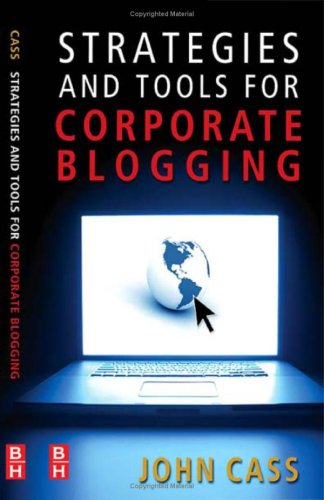
It’s a common problem. At the PR Communications blog, author John Cass offers some tips on how to kickstart the process from his book, Strategies and Tools for Corporate Blogging.
You’re boring, other people aren’t
Lastly, there’s the issue of networking. Some people are natural social butterflies for whom it comes naturally. For introverts like me, it’s a skill that requires practice and focused effort. Regardless of whether or not it comes easy, it’s a necessary business development tool that must be mastered, regardless of whether you’re a hack, a flack, or an executive of a start-up seeking potential partners, customers, investors and employees.
Piaras Kelly on his blog offers some insights of his own on how people can overcome their inherent aversion to networking at gatherings and make the most of the business development opportunity before them. One obvious tip: talking about yourself is boring, talking about others is interesting.
By Leo Valiquette
OCRI’s last Technology Executive Breakfast of the season this morning featured three media figures well-known in the local business community, commenting on how to successfully engage the media.
With the catchy title of “Evaluating your media technique: Are you a hooker or a pusher?”, CFRA‘s Rob Snow, CTV-Ottawa’s Paul Brent and the Ottawa Citizen’s James Bagnall discussed what it takes to grab and hold the attention of the media, from the perspectives of radio, television and print.
Despite the fact that these local outlets are far more horizontal than the majority of the trade and industry press we predominantly deal with on behalf of our clients, there are plenty of worthy points that apply across boundaries. Many of these points, I’ve commented on before (Engaging the media: Part I and Part II), drawing on my own years as a business journalist. The messages from the fellows this morning boiled down to the following points:
1. Know the outlet you are pitching. Is your story the kind of material a particular media outlet is looking for? Easiest way to find out is read it or tune in to see what kind of news has been covered.
2. Make your message clear, crisp and comprehensible by the majority of people. These aren’t engineers you’re pitching to. In one example offered by the speakers, a long-winded pile of techno-jargon was distilled down to “It makes your cellphone battery last longer.”
3. Appreciate the value of an informed public relations intermediary who can speak with the media to provide more background, context and explore additional story angles if a journalist interested in the story needs more information.
4. Consider the medium. Print, radio and television all have different needs. Print can devote inches to detail and background. Radio needs clear communicators who can hold an audience. TV demands graphics, images and descriptive video. As Paul Brent says, a viewer should be able to understand what a broadcast story is about without having to hear the audio.
5. Be available. This one struck the greatest chord with me. As a journalist, I can’t remember the number of times we decided to act on a press release, only to find that the contact listed was on vacation. Or PR people who offer a source for comment on a given issue or topic, then act as if it’s a hassle for them to set up the interview when you take them up on the offer. Even more important is the willingness to respond to bad news as well as good news. It’s the only way to have any part in a story that will likely get written regardless of your participation. For some reason, bad news just won’t go away if you ignore it.
Having been on both sides of the fence, I remain convinced that the vast majority of journalists are looking to provide accurate, factual and compelling content for the readers to the best of their ability. But they’re also working under tight deadlines, often with little time to devote to research. It’s in the best interests of any PR person, therefore, to do their own research and ensure they taking the right story to the right outlet and have readily available the information and sources the journalist needs to produce a quality piece by deadline. You can’t control what a journalist ultimately writes, but you can work with them to ensure you have provided everything you could to prevent any unwelcome surprises when you pick up the paper or turn on the TV.

By Leo Valiquette
This may be a little off topic for a public relations blog, but it’s one of those issues that can have far-reaching consequences for any organization, impacting productivity, staff morale and the retention of top talent.
I’m talking about vacation time. We want it, we count the days till we can take it, and yet, many of us find one reason or another not to indulge. At least, that’s the conclusion of a report in the news today which you can read at the The National Post, which found that 29 per cent of us are not taking our full allotment of vacation time each year, despite that fact that increased and more flexible vacation time is a big magnet for getting new bodies in the door, especially with the 20-something crowd. According to the study, $6.3 billion worth of vacation time is being given back to employers each year, the equivalent of about 41 million discarded vacation days.
This is creating a condition known as “vacation deprivation,” most often sparked by fears of missing important meetings and being perceived negatively by co-workers and superiors.
Get over it. If you are a valuable contributor to your organization, your allotted vacation time is your just reward. Sure, there’s always a measure of inconvenience when a member of the team is away for a period of time, but that shouldn’t be seen as a barrier to a deserved break that will help one recharge the batteries and return to the job rested and renewed. It’s a short-term pain for a long-term gain. The alternative is burned out employees who no longer perform at their optimum level.
At my previous employer, staff were not allowed to carry over vacation time, or take cash in lieu. The emphasis was on giving staff the break they needed, in no small part because of the liability issue if someone ended up on a stress leave and could blame it on the employer and vacation deprivation.
So as we head into the hot and hazy days of summer, don’t begrudge yourself, or your staff, the right to take that much needed break. I’ll be at the cottage myself next week.
By Leo Valiquette
Despite common misperception, Ottawa is home to entrepreneurs seasoned in the school of hard knocks who understand that the road to success is more often paved with customer interaction than it is by venture capital dollars or a preoccupation with product development behind closed doors.
Jay Litkey is one such entrepreneur. He took centre stage last week (or at least, the centre of the boardroom floor) at the last Startup Drop-in of the season at the offices of Labarge Weinstein.
Jay is co-founder and CEO of Embotics, a company he and the management team built from the ashes of Symbium, which met its end after a venture capital deal went sour a few minutes past the 11th hour.
Embotics has a relatively simple value proposition. As virtualization becomes more and more popular in the server farms of large organizations, it can be a challenge to efficiently manage it. Embotics’ V-Commander product helps organizations manage and monitor their virtual machines (VMs).
As Jay summed it up in an interview with the OBJ last fall:
“With the products of companies like Microsoft and VMWare, all you have to do is click a button and create a new server, and that leads to what is called ‘virtual machine sprawl,'” he said. “There’s exponential growth in the number of servers since you no longer have to buy a physical computer (to deploy a new server), and that’s a bad thing for enterprises when they can’t know who did what and what’s happening.”
Clear market, clear value proposition. The trick for Embotics has been keeping its cards close to its chest while the market matured enough for there to be substantial demand for its product. Before v1.0 of V-Commander became commercially available last fall, it was in beta with large enterprises in key verticals such as pharmaceutical, telecommunications, internet hosting, financial services and manufacturing sectors. With v2.0, the company is again taking that beta approach.
And as Jay emphasized this week, that kind of customer engagement throughout the product-development cycle is key. There is no other way to get the pulse of your market and understand whether or not your product addresses the right pain points and offers the features most valued by potential customers.
From the perspective of what we do here at inmedia, at some point that would likely involve a calculated public relations campaign targeted at those key trade media that reach these potential customers. And nothing gives the story more punch than testimonials from existing customers, but I digress.
Coming back to what Jay had to say, to drive a product through from idea to market adoption, he offered the following points:
1. Your first great idea is always full of holes. The sooner you can accept that and the more willing you are to seek out and absorb candid feedback and criticism, the quicker you’ll move ahead. So be humble.
2. Customer feedback is the only sure way to find out where you’re wrong, which means that …
3. Your focus out of the gate should be on customer interaction, rather than chasing VC dollars. Nothing gets the attention of investors faster than early traction with potential customers. (Embotics, by the way, has no VC investment.)
4. Adopt a philosophy that’s been evangelized by the titans in the Valley—fast failure. Failure is the path to wisdom and insight. Countless corporate icons have an impressive list of failures to their credit.
Perhaps you agree with Jay, perhaps you don’t. Feel free to comment one way or the other. What’s important is that there is dialogue in the local community on how to grow successful companies in Ottawa. What works, what doesn’t and what can we try next.
But I wholeheartedly agree with Jay — the primary focus out of the gate must always be on the end user, the customer. Product development for its own sake has no place in private enterprise. Engineers in the Valley get that and appreciate the value of early customer engagement. It’s the difference between being product or service focused, between saying “I have a product you should buy,” or “I have this solution to your problem. “ As long as we remain product-focused, the outlook for this region’s tech economy will be uncertain at best.
By Leo Valiquette
Nothing develops deeper familiarity with the lay of the land than on-the-ground reconnaissance, a truth that was impressed upon me over the weekend.
Last week I spent several days in Atlanta with one of our clients, Touch Bionics, maker of the world’s first fully articulating prosthetic hand, the i-LIMB. We were attending the annual conference of the Amputee Coalition of America.
Now, in the two months since I joined inmedia Public Relations, I’ve been familiarizing myself with, and working fairly extensively on, the Touch Bionics account. In fact, it’s the first client account with which I was involved. My second week with inmedia was spent on a road trip to the U.K. that included a stop at Touch Bionics’ corporate headquarters in Livingston, Scotland. I’ve worked on media lists for Touch Bionics, coordinated media opportunities, including a live segment taking place this morning on the CBS Early Show, interviewed i-LIMB users and written profiles from those interviews.
It’s been a hands-on learning experience, but hardly exhaustive. In fact, spending a few days at the conference in Atlanta, where I could speak with other prosthetic manufacturers, distributors, amputees and clinicians and see the i-LIMB in use, provided insight and context to match, even exceed, everything I had learned in the preceding two months. It’s an invaluable experience that has dramatically increased my understanding of the Touch Bionics story, the competitive market landscape and the amputee community.
Most importantly, and this was my primary reason for going down there, it’s allowed me to cultivate face-to-face connections with new media channels beyond the obvious ones. It’s intelligence that could only have been garnered on the ground.
There are a lot of PR shops out there that lure their prospective clients with lines like, “Well, we already have all these contacts,” or, “We have all these existing relationships” with the key trade or industry press in which the client’s story needs to be told.
Considering that in any given scenario the key media could number in the dozens and be scattered across a country or eight, it’s hard to see that as anything but a line of bull. What’s important in a PR agency is its ability to seek out and cultivate the media channels that best serve the client’s interests beyond the warm and fuzzy comfort of whatever relationships already exist. It’s our specialty at inmedia and it can only be accomplished through research and no small amount of cold calling. And as I learned last week in Atlanta, it can’t always be done from behind a phone and a desk.