By Danny Sullivan
Media monitoring is a function of every PR firm, but how comprehensive a service are you getting? There are a hundred and one services and solutions out there, but each comes at a cost and, for the average PR firm, there isn’t an unlimited budget for such things.
We use a few tools that, when combined, provide a fairly comprehensive report on clients’ coverage. However, there are still some pieces of coverage that aren’t always picked up on, typically in niche publications without much web content.
The best form of media monitoring is knowing where your coverage is likely to appear and keeping an eye open for it – although this is admittedly less practical for coverage of news announcements, where monitoring tools really come into their own.
Ensuring you are subscribed to the more niche publications on your target list should cover the possibility that your tools and services miss something. Of course, this becomes less practical if you are monitoring coverage that is occurring all across the globe.
Ultimately, you have to achieve a level of media monitoring accuracy that is acceptable to you and your clients, at a reasonable budget, while understanding that there may be some pieces that will slip through untracked.
If anyone has any particular tools and services or combinations that they have found to work particularly well in terms of effective monitoring, I’d be interested to hear from you.
By Leo Valiquette
Oh nuts
A few weeks ago in a blog titled, The interview is never over, Francis talked about how one should never assume an interview with a journalist (or a blogger) is over until said journalist is out of earshot.
In the age of citizen journalism and the blogosphere, those ready with a notepad or tape recorder aren’t as easy to identify as they once were, so it behooves anyone concerned about how their comments and opinions can impact not only their image but that of their organization to avoid provocative, off-the-cuff remarks. Bottom line, if you don’t want to see it in print, don’t say it. And that doesn’t apply only to your discussions in public, it also applies to comments made in a public place where there could be a recording device lurking nearby.
Case in point, last night The New York Post featured the headline Jesse Jackson says he wants to cut Obama’s ‘nuts out’. Unfortunately the good reverend, who once aspired to be the first black U.S. president, made the comments off camera in a TV studio and failed to realize a microphone nearby was recording.
Tapping into the brain trust
 In recent meetings with a new client, we discussed the wealth of knowledge stored in the grey matter of the company’s chief tech guy. We talked about the value of being able to tap into this resource to position the client with the media as a thought leader in its space. This is an excellent way to maintain media exposure and interest for a client when there are no major corporate announcements in the pipeline. Editors and journalists are always looking for subject matter experts to comment on trends and issues.
The challenge, of course, is getting this busy executive engaged in the process of expelling his knowledge, perspective and cutting insight onto paper or a corporate blog.
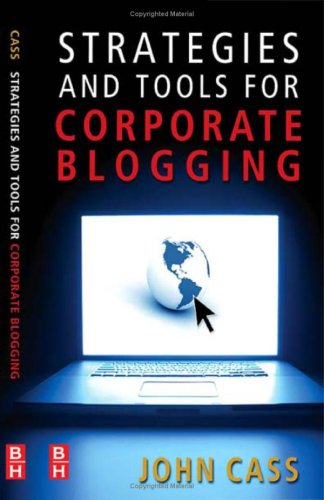
It’s a common problem. At the PR Communications blog, author John Cass offers some tips on how to kickstart the process from his book, Strategies and Tools for Corporate Blogging.
You’re boring, other people aren’t
Lastly, there’s the issue of networking. Some people are natural social butterflies for whom it comes naturally. For introverts like me, it’s a skill that requires practice and focused effort. Regardless of whether or not it comes easy, it’s a necessary business development tool that must be mastered, regardless of whether you’re a hack, a flack, or an executive of a start-up seeking potential partners, customers, investors and employees.
Piaras Kelly on his blog offers some insights of his own on how people can overcome their inherent aversion to networking at gatherings and make the most of the business development opportunity before them. One obvious tip: talking about yourself is boring, talking about others is interesting.
By Danny Sullivan
Proactivity is something that all clients desire of their PR firms – an ability to move the program forward without having to check in and report at every stage. It’s certainly not an unreasonable expectation, and one that any agency worth its salt should be capable of meeting.
But proceed with caution. Agency proactivity, while a stated desire of the client, can be a double-edged sword for an agency. There are a couple of pitfalls to watch out for.
First, don’t be so proactive that you overstep the mark and make strategic changes or decisions without some form of approval from the client. It’s all very well to change a strategy for the right reasons, but these reasons usually need to be raised before the change occurs. It is important to establish at the outset of the program what kinds of decisions need to be made in conjunction with the client.
Second, proactivity can lead to periods of radio silence. If the program is one where the results will not be immediately apparent, then the client will be wondering what their agency is doing. An invisible agency won’t be around for long.
The key to avoiding such pitfalls is in effective communication with the client. There is no need to appraise them of every step that you take, but regular updates on progress that don’t require any input from them will go a long way to ensuring that you continue to be both proactive and visible.
By Francis Moran
One of the first of what I like to call “Francis’s favourite fictions,” or “Everything I know that’s wrong about PR I learned from technology company executives,” was a line from the CEO of one of the very first tech companies I pitched when I originally ventured out on my own in the early 1990s. “I want to be on the front page of the Ottawa Citizen tomorrow morning,” he said.
I was a lot younger, thinner and more intemperate in those days, so I replied, “Okay. Go home and shoot your wife tonight.”
Right answer, just not terribly delicately put. However, he got the point and I got the gig.
What I was trying to say, of course, is that media relations usually doesn’t work that way and, for some companies, it never works that way. In fact, at inmedia, our objective is never Page 1 tomorrow. Rather, we try from the very outset to build the kind of foundation for an ongoing media relations effort that will generate meaningful coverage over the long haul. In the technology B2B space, where virtually all our clients are new, small and/or completely unknown, this means we first must thoroughly educate target media about the client, its story and how it will be of interest to the journalists and their audiences now and into the future. If this process delivers immediate coverage, so much the better, but that’s not the primary intent.
This first company was also the first time I tried out what has come to be known around here as a ramp up and roll out, or the media and analyst launch of a company that builds the foundation I’m talking about. The company had recorded many newsworthy successes in its history and had a market-leading presence in its space. However, as we also like to say around here, they call it the “news” business, not the “olds” business. So most of those achievements were now just so much fishwrap as far as the media were concerned.
What I did was develop a comprehensive set of materials that told the company’s complete story, including a timeline of its growth and successes and a couple of case studies that showcased its leadership position. I then sent that package out to the media I had identified, through research, as being at the intersection of Writes-about-this-subject and Influences-my-client’s-market. I followed up with each of them, had great conversations about how my client might feauture in future coverage, and even generated some really good immediate hits. Over the long run, I generated a constant stream of coverage about the client, including, eventually, a Page 1 piece in the Ottawa Citizen.
If a client today tells me the same thing — “I wanna be on Page 1 tomorrow.” — I tell him or her much the same thing. I just use a slightly more subtle approach now.
By Danny Sullivan
I recently had a reporter come back to me to get a client’s comment for an article he was writing – a direct result of a previous conversation we had had about another story. It’s great when that happens, but all too uncommon.
Dealing with the media can be a frustrating experience. Perhaps you’ve developed a good story pitch and have managed to get a key reporter on the phone, but you get a response along the lines of, “Sounds interesting, but I’ve got too much on my plate just now. Keep in touch though.”
Sounds like a brush off, doesn’t it? But it isn’t. If you have done your research well, then you know that this reporter should be interested in your story and his request to stay in touch is genuine. The key point is not to give up on things after such a call.
It can be a challenge to maintain the motivation to keep checking back with reporters, but doing so is often the difference between success and failure. The media are a busy bunch, but if they’ve indicated interest, you just need to try and catch them at the right time. Don’t give up on a lead until you are sure the opportunity is gone.



