By Francis Moran
My wife and I were listening this morning to a local CBC radio story about a filmmaker who had invested very large sums in the production of short video clips intended for viewing online or on mobile devices. I was only half listening, so please excuse the lack of more precise details. The point is that he was quoted as being “hopeful” that an arrangement he had forged with Canadian ISP Sympatico would eventually pay dividends for him if his content drove higher viewer numbers that, in turn, drove higher ad revenues for Sympatico.
Good luck, my wife commented, adding that the nut of getting web content to pay is still, to a very large degree, yet to be reliably cracked. Besides adwords, what’s your play?
Well, for some time now, I’ve been hearing about the growth of internet advertising, especially its growth outside adwords. Our family breakfast discussion this morning was timely given a research report out of IDC just today that said, “Worldwide spending on Internet advertising will total $65.2 billion in 2008, which represents nearly 10% of all ad spending across all media.” The researchers went on to predict, “this share will reach 13.6% by 2011 as Internet ad spending grows to $106.6 billion worldwide.”
This is good news for our filmmaker and others seeking to monetise their content through advertising revenue. Still, IDC said, spending on display ads would not outstrip spending on adwords anytime soon, with display ads expected to account for only 20% of all online ad revenues, compared to fully 33% for adwords and just a shade ahead of the 19% share claimed by classified advertising.
This, I believe, is where internet advertising is missing the boat. And it’s a point I have not heard made by most of those talking about advertising on this medium.
Research consistently shows that as much as 80% of the purchase decision-making process takes place within one metre of the product itself; in other words, in the store aisle while the consumer is eyeballing her or his array or choices. At that critical stage, most advertising is but a dim memory.
The internet is the only place, outside of in-store or point-of-purchase advertising, where the opportunity to promote a product lives cheek-by-jowl with the ability to actually purchase the product. This incredibly powerful cohabitation of promotional message with the product itself is the very force behind the planet’s most successful e-commerce sites such as Amazon, but it is a force seemingly only dimly understood by too many of today’s online advertisers who fail to grasp that the internet is not just a medium, it’s also a marketplace.
Until these two elements come together — medium and marketplace — the full potential of internet advertising will not be realised and our local filmmaker will never become rich.
By Linda Forrest
This morning on my way into the office, I saw about 50 grown men (sad to say there wasn’t a female among them) camped out outside a Rogers store to be the first to get their hands on an iPhone 3G, available today for the first time in Canada. The long line ups and eager anticipation extend beyond Canada’s borders as the new version of the phone has some additional bells and whistles that have Mac-philes and the hoi polloi alike very excited.
When I saw the faithful gathered this morning in aim of a common goal, I was reminded of “back in the day” when, prior to the internet, I lined up for hours and hours to buy concert tickets at the local Ticketmaster outlet. That situation, like this, was a “you snooze, you lose” proposition as I’m confident in saying that it’s doubtful that the little Rogers stand in the Rideau Center has enough iPhones on hand to meet the demand and only those brave souls who were in line prior to the store’s opening are likely to be entirely unproductive today at their jobs as they play with their new toys.
My point, and I do have one, is that the buzz surrounding this product has reached a fever pitch, and that people who perhaps have never had a mobile phone, let alone a whiz-bang PDA like the iPhone, are chomping at the bit to get their hands on one. This not only increases the demand for mobile applications, but also means that a whole lot more people will be using Canada’s wireless infrastructure, not to mention entering the world of constant accessibility.
As PR practitioners, we have to be constantly available to our clients. One never knows if and when breaking news could hit and we need to respond to it immediately or switch into crisis mode at a moment’s notice. To that end, the introduction of the iPhone to our team has been wonderful – allowing each of us to have access to our email and the internet no matter when it is, no matter where we are. As Francis has said on occasion, yes, it’s a leash, but it enables us to take vacations and be out of the office, if need be, yet still be plugged in. The trick, then, becomes unplugging, not checking your email as soon as you awaken and as the last thing at night. Oh, who am I kidding – we all do that anyway, regardless of whether we’re using our computers or our iPhones to connect.
To those of you who are just getting your first iPhone today, congratulations and enjoy. I think the employers of the world must have come together to encourage this release on the last day of the workweek in the hope that the anticipated lost productivity would be limited to a sunny Friday and people will spend the weekend, off the company clock, experimenting with their new gadgets.

By Francis Moran
Almost exactly 10 months after publishing our very first blog post on September 14 last year, here we are celebrating post number 250! It’s been a fascinating journey of learning and experimentation, and I’d like to share some of that with you today.
If 250 posts in 10 months means we’ve written about 25 posts per month, then we have slightly bested our target of averaging one post per business day. There have been a few thin weeks along the way as client requirements dominated our time, but in the main, we have achieved what we set out to do by way of posting frequency.
Our best-practices posts, which highlight a particular part of our media relations practice, often using a client case study as illustration, are among our most consistently read posts. Such posts were a key part of our editorial strategy for the blog.
We have been less successful achieving two other parts of the editorial strategy. We have written fewer pieces that comment on what’s going on in the wider world in which our clients live, and we have had many fewer guest posts than originally hoped for. Both these targets are a function of not having a dedicated blog editor spending the kind of hours necessary to find stuff for our writers to comment on and recruiting posts from our clients and others in our network.
Our readership, after growing quite rapidly over the first two months, has averaged about 650 visitors per month, on top of our roughly 100 RSS and email subscribers. (This latter number ebbs and flows a bit but continues to grow steadily by about 10 a month.)
Our internal objective was to have more than 1,000 visitors at the one-year mark. We hit 793 site visitors last month, and topped 800 at least once, so I think we are well on our way.
More to the point, though, is what our blog has done for our organic search engine rankings. Even by month three, we were seeing extraordinary improvements, going from could-not-be-found to top-50, top-20 and, in many important areas, even top-10 results for the kinds of searches we believe prospects run when looking for a PR company. We have yet to be able to link a new piece of business directly to such a search, but we know that many prospects have read our blog and are impressed by what they see there.
We could do a much better job of building out the links that would make us a more active part of the extensive community of bloggers who write about public relations and technology marketing. Again, having an editor with more time to devote to this would improve our effectiveness.
Now, the tough part. Has it been worth the investment?
Well, I said at the outset that I would hold off on hard ROI calculations until we had a full year under our belts. I can say that it is a very expensive proposition maintaining a blog with so much original content. We are timekeepers, so I know exactly how much this costs. I’ll keep that amount under wraps for now but will say that anyone who believes Web 2.0 tactics like blogging are free or low-cost either ain’t doing it right or ain’t counting up all the costs.
Speaking just for myself, I have thoroughly enjoyed once again having an outlet (pulpit? soapbox?) for my views on certain subjects. I know many others around here have equally enjoyed being able to share their views and opinions. From that perspective, it has been very worthwhile.
Bottom line: We see value here and we intend to continue. Thank you for joining us, and keep coming back.
By Leo Valiquette
Oh nuts
A few weeks ago in a blog titled, The interview is never over, Francis talked about how one should never assume an interview with a journalist (or a blogger) is over until said journalist is out of earshot.
In the age of citizen journalism and the blogosphere, those ready with a notepad or tape recorder aren’t as easy to identify as they once were, so it behooves anyone concerned about how their comments and opinions can impact not only their image but that of their organization to avoid provocative, off-the-cuff remarks. Bottom line, if you don’t want to see it in print, don’t say it. And that doesn’t apply only to your discussions in public, it also applies to comments made in a public place where there could be a recording device lurking nearby.
Case in point, last night The New York Post featured the headline Jesse Jackson says he wants to cut Obama’s ‘nuts out’. Unfortunately the good reverend, who once aspired to be the first black U.S. president, made the comments off camera in a TV studio and failed to realize a microphone nearby was recording.
Tapping into the brain trust
 In recent meetings with a new client, we discussed the wealth of knowledge stored in the grey matter of the company’s chief tech guy. We talked about the value of being able to tap into this resource to position the client with the media as a thought leader in its space. This is an excellent way to maintain media exposure and interest for a client when there are no major corporate announcements in the pipeline. Editors and journalists are always looking for subject matter experts to comment on trends and issues.
The challenge, of course, is getting this busy executive engaged in the process of expelling his knowledge, perspective and cutting insight onto paper or a corporate blog.
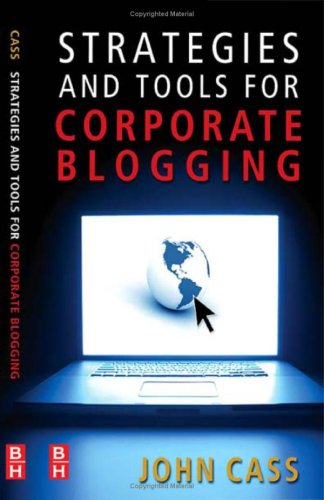
It’s a common problem. At the PR Communications blog, author John Cass offers some tips on how to kickstart the process from his book, Strategies and Tools for Corporate Blogging.
You’re boring, other people aren’t
Lastly, there’s the issue of networking. Some people are natural social butterflies for whom it comes naturally. For introverts like me, it’s a skill that requires practice and focused effort. Regardless of whether or not it comes easy, it’s a necessary business development tool that must be mastered, regardless of whether you’re a hack, a flack, or an executive of a start-up seeking potential partners, customers, investors and employees.
Piaras Kelly on his blog offers some insights of his own on how people can overcome their inherent aversion to networking at gatherings and make the most of the business development opportunity before them. One obvious tip: talking about yourself is boring, talking about others is interesting.
By Linda Forrest
As we’ve previously mentioned, to work at inmedia, it’s almost a prerequisite to be a self-professed “word nerd.” Christmas gifts are often grammar-themed and we are all avid readers, both on and off company time. Therefore, it is with great relish that I point to the latest words to be added to the newest edition of the Merriam-Webster Collegiate dictionary.
In order to be deemed mainstream enough to make the dictionary, words must be routinely used in print without explanation, thus indicating that they’re widely understood. A major driver of these “new” words is technology. By its very nature, technology is cutting-edge and inventive, requiring endless expansion of our lexicon and creating the opportunity for individuals and executives alike to coin a phrase that eventually becomes widely used and legitimized by inclusion in the dictionary.
Working in the technology milieu as we do, I’m a bit surprised to see that webinar is only just now making the grade, but perhaps by saying that I’m unintentionally pretexting as an early adopter to glean commentors’ thoughts on the matter … Enjoy.
-
Be proactive, but be visible
July 09, 2008 by Danny Sullivan
By Danny Sullivan Proactivity is something that all clients desire of their PR firms – an ability to move the program forward without having to check in and report at every stage. It’s certainly not an unreasonable expectation, and one that any agency worth its salt should be capable of meeting. But proceed with caution. Agency proactivity, […]
Read more... -
I wanna be on Page 1 tomorrow
July 08, 2008 by Francis Moran
By Francis Moran One of the first of what I like to call “Francis’s favourite fictions,” or “Everything I know that’s wrong about PR I learned from technology company executives,” was a line from the CEO of one of the very first tech companies I pitched when I originally ventured out on my own in […]
Read more... -
-
Blogging about blogging
July 03, 2008 by Linda Forrest
By Linda Forrest Is it surrealist to blog about blogging? It’s not my intention, but should this post turn into an Escher-esque experience, I’ll ask you to please bear with me. There has been considerable media coverage in recent days about corporate blogging and blogging as it pertains to B2B marketing. Forrester, a well respected […]
Read more... -
Keep on keeping on
July 02, 2008 by Danny Sullivan
By Danny Sullivan I recently had a reporter come back to me to get a client’s comment for an article he was writing – a direct result of a previous conversation we had had about another story. It’s great when that happens, but all too uncommon. Dealing with the media can be a frustrating experience. Perhaps you’ve developed a […]
Read more... -
-
June Roundup: Brevity, sales and social media
July 02, 2008 by inmedia
By inmedia In case you missed any of these posts the first time around, here’s a recap of everything we published in June. Francis: June 11: The interview’s never over… June 24: The best earbud ever and outstanding customer service, too Linda: June 5: When it comes to pitching, brevity is the soul of wit […]
Read more... -
Those lazy, hazy, crazy days of summer
June 27, 2008 by Linda Forrest
By Linda Forrest As we here at inmedia are coordinating our upcoming vacation schedules and as next week has two major holidays in North America that kick off in earnest the sorts of summer activities that Nat King Cole envisioned in the song whose title is above, we begin to hear the common summer rumblings […]
Read more... -
-
Dealing with the media ain’t rocket science
June 26, 2008 by Leo Valiquette
By Leo Valiquette OCRI’s last Technology Executive Breakfast of the season this morning featured three media figures well-known in the local business community, commenting on how to successfully engage the media. With the catchy title of “Evaluating your media technique: Are you a hooker or a pusher?”, CFRA‘s Rob Snow, CTV-Ottawa’s Paul Brent and the […]
Read more... -
Determining the right level of investment in PR
June 26, 2008 by Danny Sullivan
Danny Sullivan For companies looking to establish a PR program, there is a burning question that rises above all others: how much should I invest in PR to achieve the best return? Every company is different, and simply throwing more money at a program is not necessarily going to improve results. Is it reasonable to expect a […]
Read more... -






Twitter
Tweets by @FrancisMoranRecent Comments
The Future of A&R – Walabe : [...] http://francis-moran.com/marketing-strategy/top-10-questions-every-strategic-communicator-should-ask... [...]
Traditional Marketing is Dead – Long Live Bikini Waxer Marketing | Scalexl : [...] pointed out by Alexandra Reid on the Francis Moran website content marketing is becoming more and more like journalism. So, it is not just about the content, [...]
It’s Summertime…and the Networking is Easy? | THE MERRAINE BRAIN : [...] In fact, summer is perhaps one of the times least used to network, yet at the same time has shown to be the most productive time to network. People tend to be in a brighter mood compared to during the gloomy winters-especially where I am from in England! Networking needs to be fun and not approached as another chore, like mowing the lawn. (http://francis-moran.com/marketing-strategy/social-media-strategy-why-meeting-in-the-real-world-matt...) [...]